

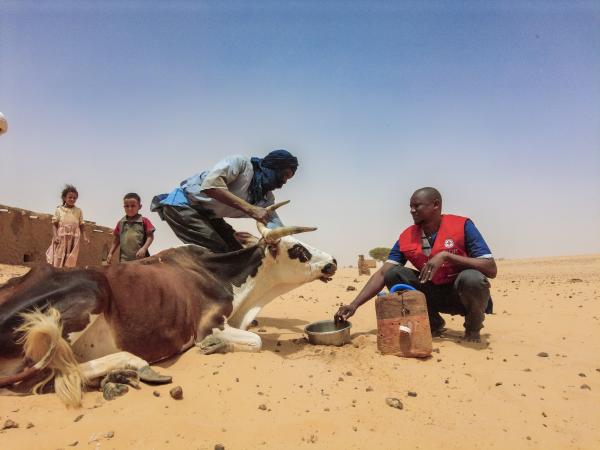
Countries affected by conflict are often among the most vulnerable to climate risks. In places like Somalia and Afghanistan, decades of violence coupled with recurrent droughts and floods have worsened food insecurity and displacement.
Nearly half of the 122 million forcibly displaced people worldwide live in areas facing both conflict and severe climate hazards. These overlapping crises strain coping capacities and deepen humanitarian needs, as seen in the Sahel, Horn of Africa, and Middle East. In response, the International Committee of the Red Cross (ICRC) and its partners apply a conflict-sensitive, climate-informed approach to deliver principled assistance to and strengthen resilience for hard-to-access populations.
WHAT SETS US APART: OUR HOLISTIC APPROACH
We at the ICRC have a unique mandate set out in international humanitarian law (IHL) to protect and assist people affected by armed conflict. With over a century and a half of experience, we take a comprehensive, multidisciplinary approach that combines emergency response with long-term solutions, ensuring sustainable impact. What sets us apart is our ability to operate in active conflict zones where others may struggle to gain access. We work closely with local partners and National Red Cross and Red Crescent Societies, leveraging community networks to implement effective, locally adapted solutions.
We acknowledge Source link for the information.